

Equipment
- Drying cupboard - whatever the weather, you will leave every morning in very dry shoes and clothes.
- Ski box
- Camera lens box
- Large screen with navigation software; connectable via HDMI and USB
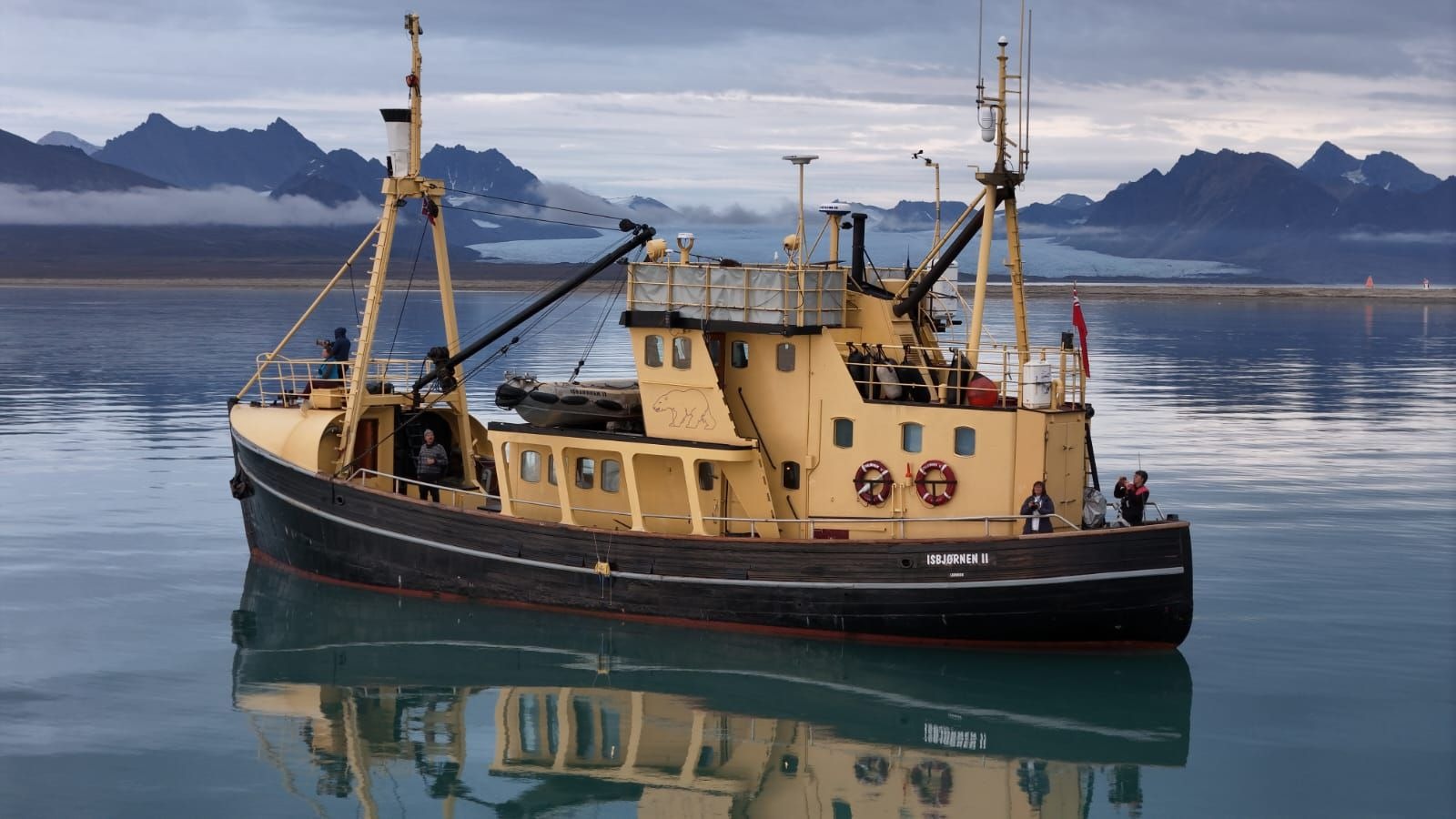
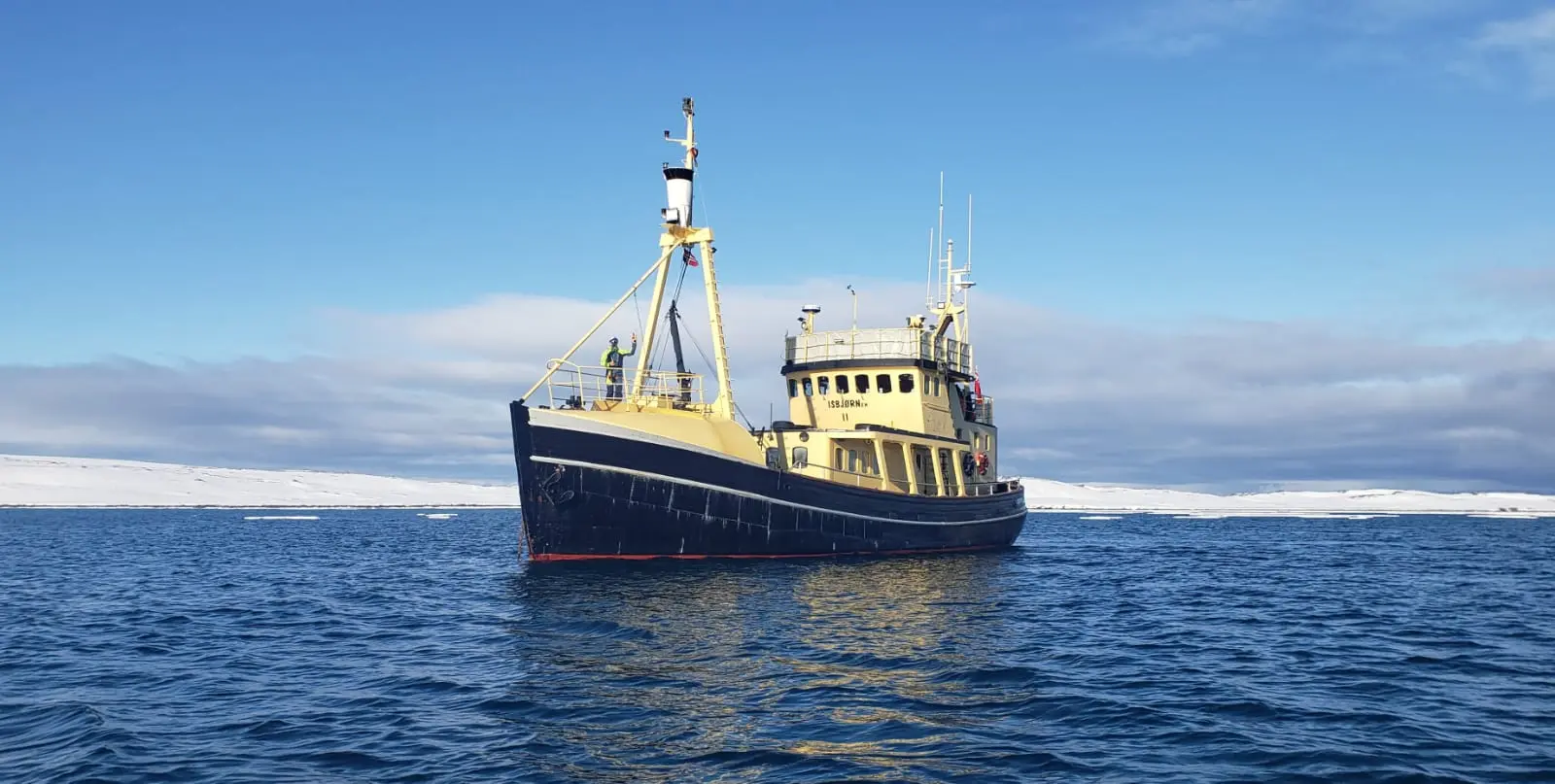
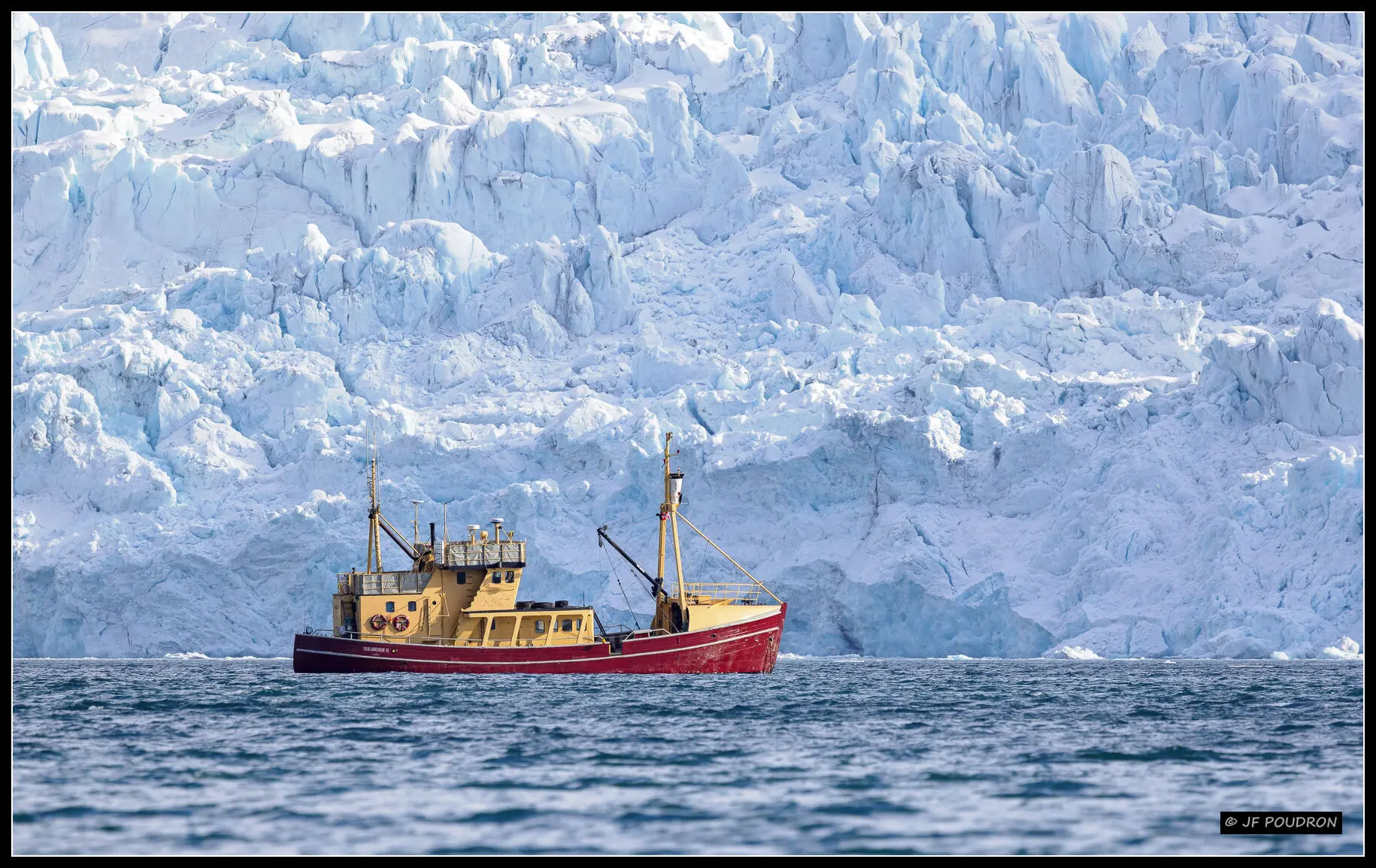
Small expedition ship
Agile, intimate and made for Arctic fjords. 12 guests, expert crew, daily landings and wildlife‑forward navigation.
12
Guests
6
Cabins
2
Shared toilets/showers
360°
Panoramic deck
Panoramic dining/saloon for shared meals and briefings, a curated library and film selection on the Arctic, and practical spaces for gear — for truly active days ashore

Length overall
22,70 m
Origin
🇩🇰 Dannish
Speed
7 - 9 knots
Beam
5,70 m
Max Draft
2.95 m

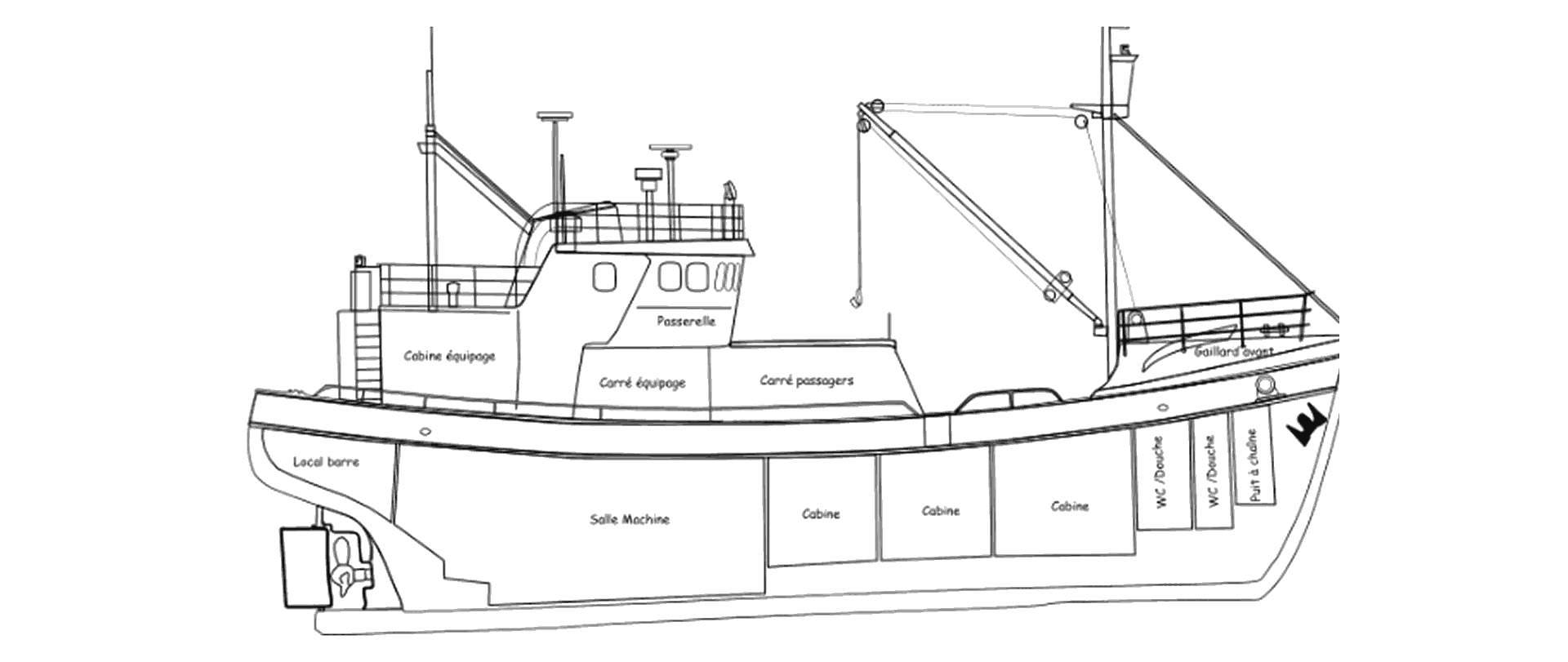
Main deck
Shared dining room with panoramic windows, outdoor observation deck, and direct access to the upper deck offering 360° views of the surrounding landscapes.

Inferior deck
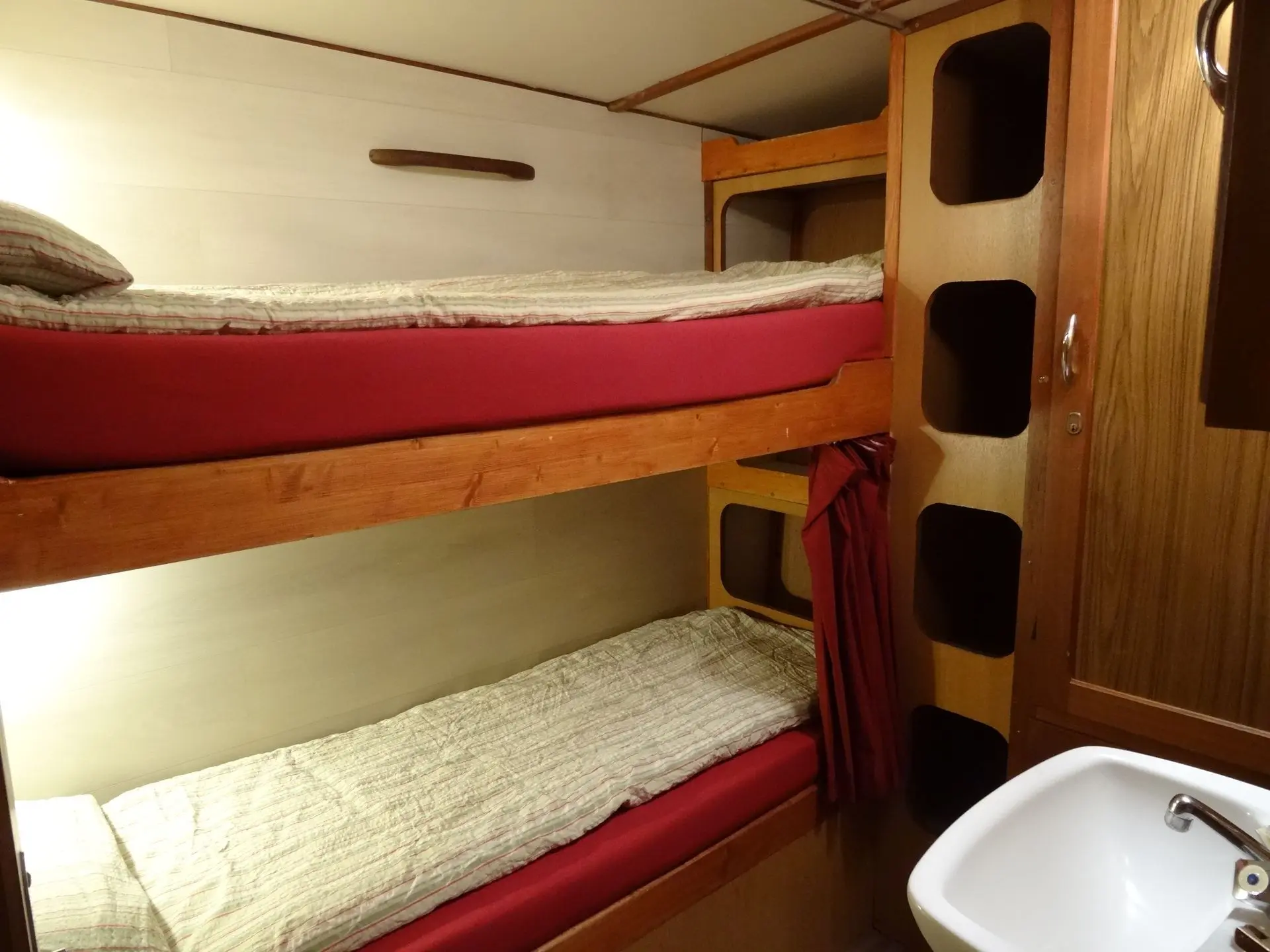
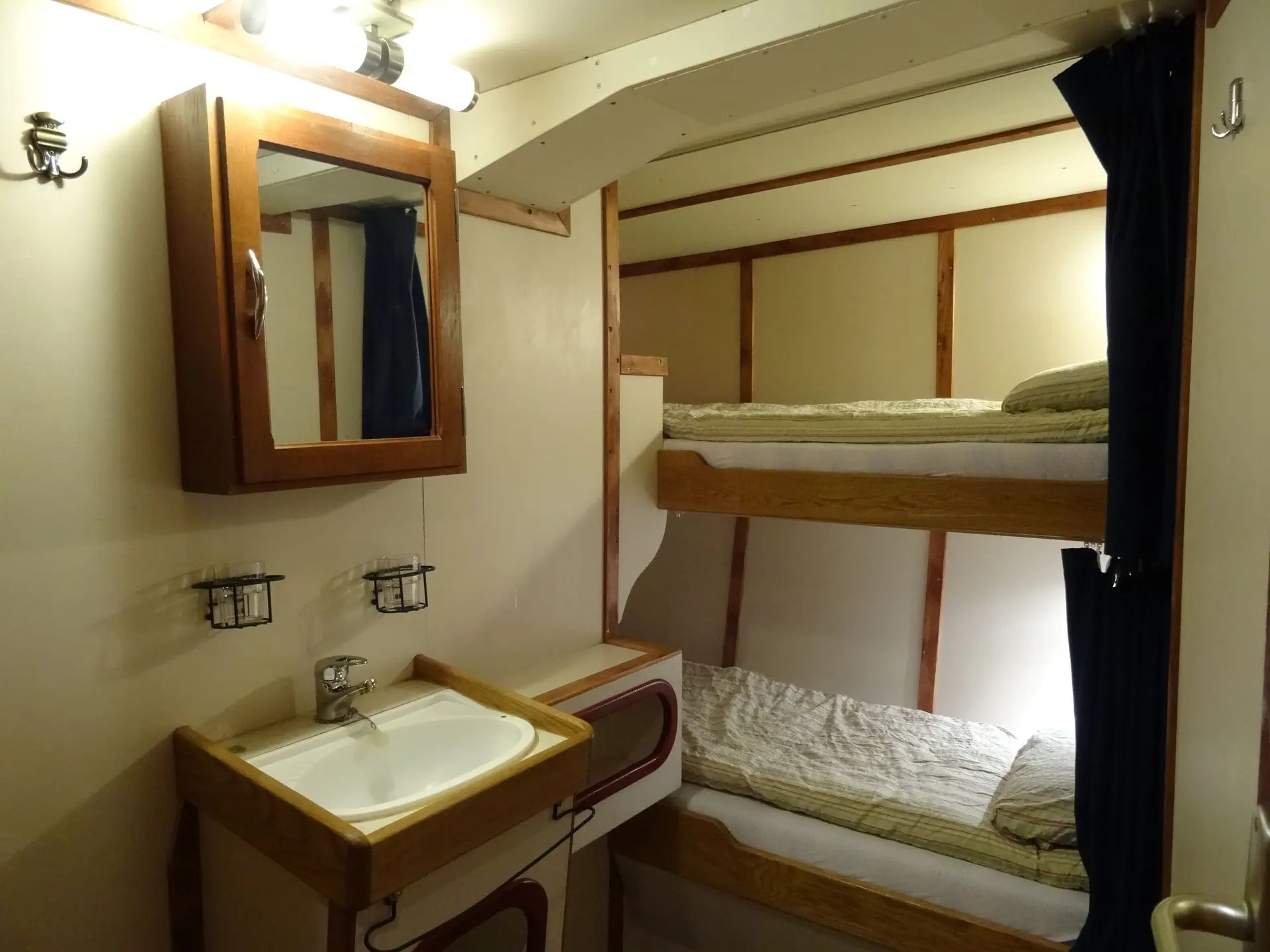
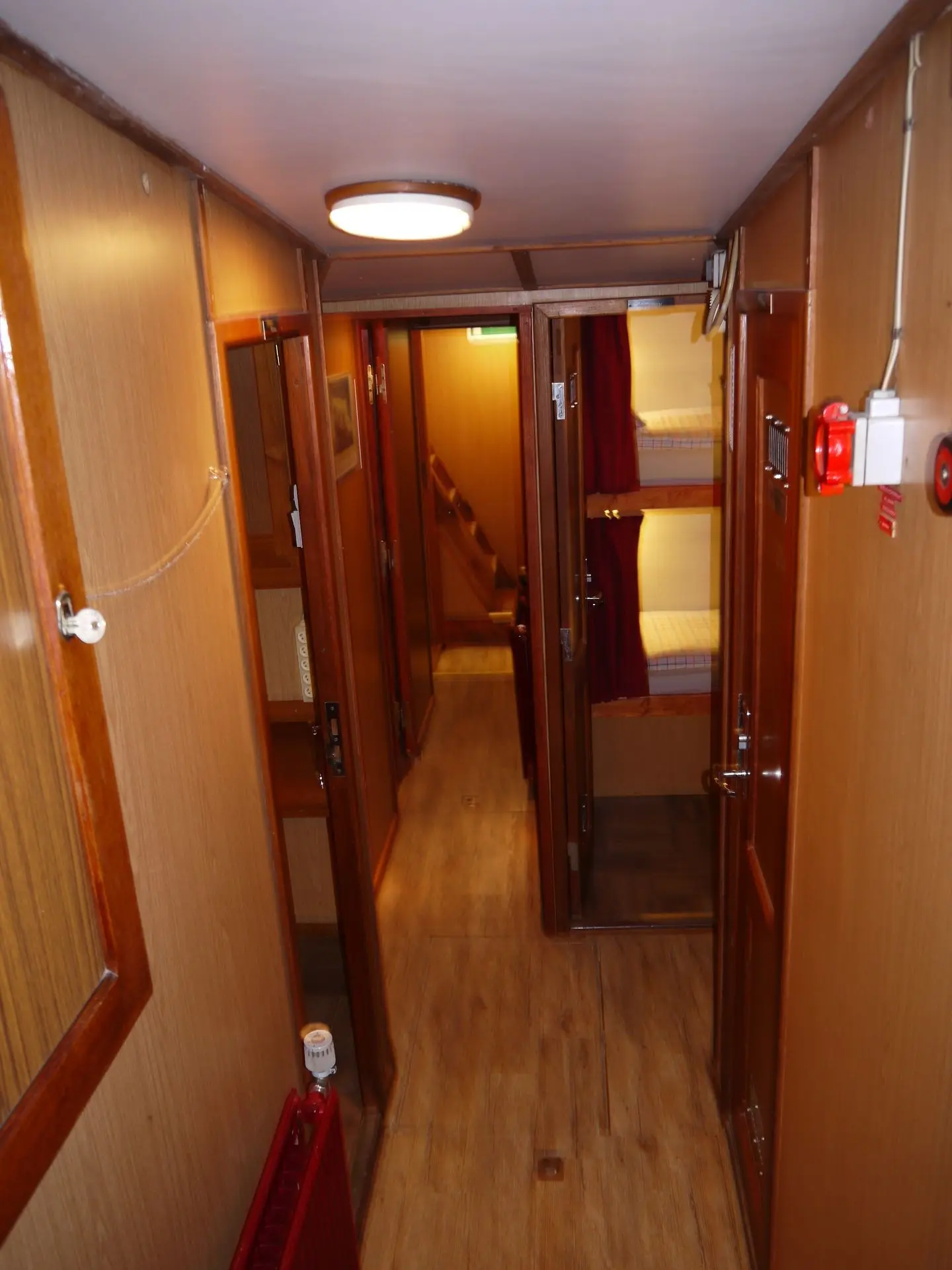
Made of 6 cabins with two bunk beds each, sink, storage, reading lights.
Access to two shared showers/WCs.

Cross-sectional plan
The MS Isbjørnen II, once known as NARSSAK I, has a fascinating history spanning several decades. Built in 1954 by the renowned shipbuilder Johannes Ring Andersen in Svendborg, Denmark, this vessel was originally designed as a sturdy vagerkutter intended to navigate the icy waters of Greenland. Measuring 22.72 meters in length, 5.77 meters in width, and with a draft of 2.67 meters, the NARSSAK I was equipped with a 180-horsepower diesel engine, supporting its sail, and constructed from noble materials such as oak and beech.
During its early years, the NARSSAK I served faithfully with the Ministry of Defense for lighthouse and coastguard services. Its missions led it to brave the elements and ensure the safety of navigation in the northern regions. However, over the decades, its missions evolved, and the ship underwent several phases of transformation.
In 1994, the vessel was sold to a maritime company in Copenhagen, headed by Morten Banke. This sale marked the beginning of a new era for the ship, now renamed NARSSAK I. By this time, the vessel had already undergone significant modifications to adapt to more diverse uses, including private navigation. In 1998, the NARSSAK I changed ownership once more, joining a new maritime company under the direction of Sonny Pedersen. Documentation is lacking, but it appears that it served as a diving boat for tourist excursions.
Despite changes in ownership and use, the vessel continued to serve with distinction until 1999, the year it was finally removed from the Danish Maritime Authority (DMA) register. This removal marked the end of an era, but also the beginning of a new phase of transformation.
After its removal from the registry, the vessel was redesigned and refitted to become the MS Isbjørnen II, a ship dedicated to Arctic adventure cruises under the British flag. This renewal allowed it to continue sailing, this time offering unforgettable experiences to modern explorers. Equipped with comfortable cabins, robust navigation technologies, and all the amenities necessary for polar expeditions, the MS Isbjørnen II perpetuates the spirit of adventure and robustness that characterized its beginnings as NARSSAK I.
The history of the MS Isbjørnen II is one of continuous transformation, from a functional vagerkutter to a comfortable expedition ship. This journey through time and uses reflects not only the evolution of maritime needs but also the adaptability and resilience of a vessel that continues to sail proudly under the Northern Lights, carrying with it a rich maritime history.
Source: http://www.jmarcussen.dk/maritim/skibsliste/side.php?id=2184


